
Every week there’s another headline about a job getting automated away. Software, customer service, analysis, even parts of law and medicine. It’s enough to make anyone starting out wonder what’s actually safe to build a life on.
Jordan Shepherd already has his answer.
“Construction’s one of the only jobs you know that AI is never going to take over.”
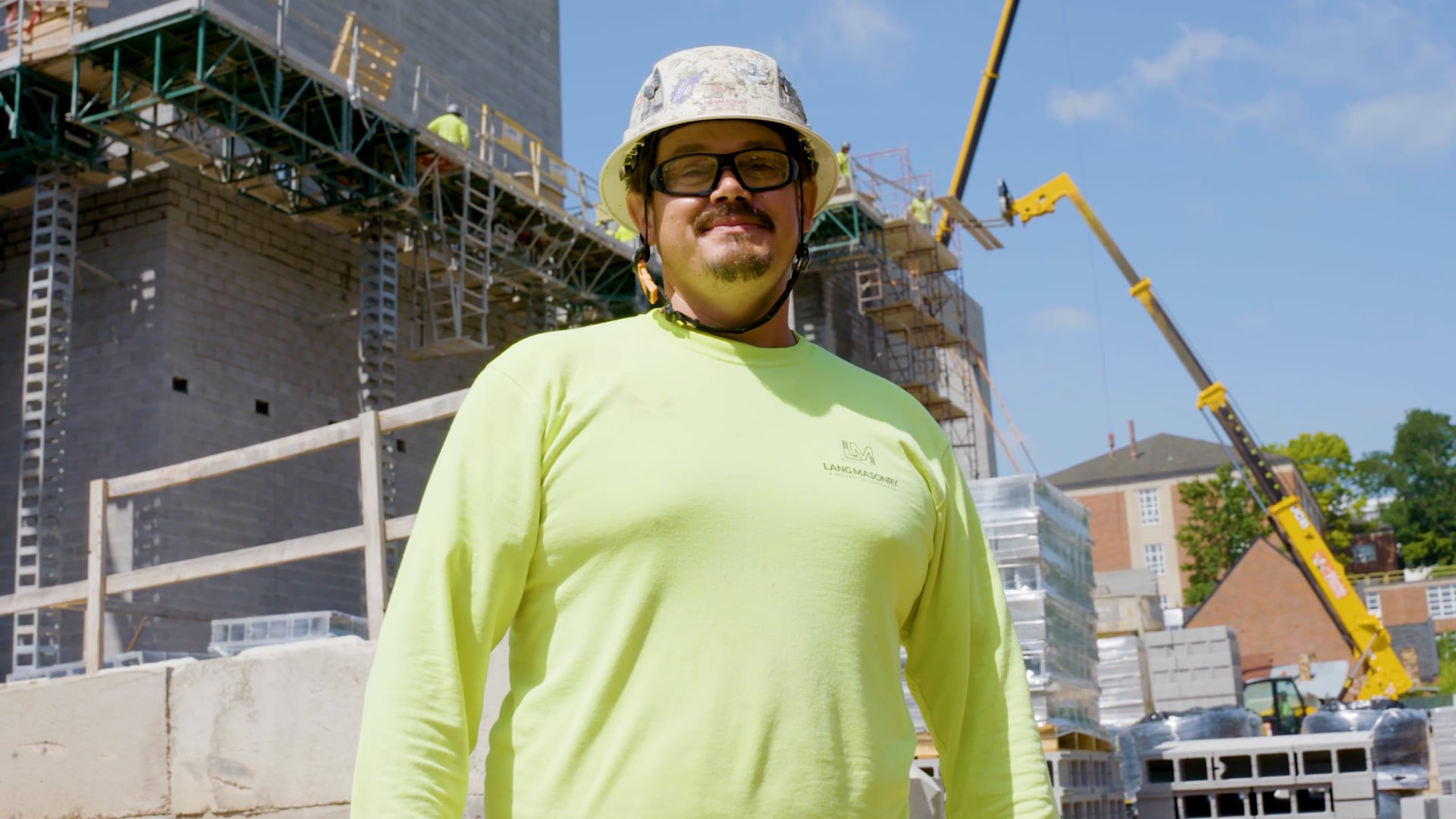
Jordan is an operator at Lang Masonry. He’s been here six months. And in that short time he’s landed on something a lot of people twice his age are still trying to figure out: the value of work that has to be done by a human being, on site, with their hands.
From Small Foundations to Serious Opportunity
Jordan wasn’t new to block work when he arrived. He’d been doing it on small foundations. But the difference between that and working for Lang was immediate and obvious to him.
“There’s so much opportunity here. It’s just amazing. It’s pretty much the best thing that’s ever happened to me. My life has gotten better so much since I started here.”
That’s a strong statement about a job, and it’s worth taking seriously. The gap between a small operation and a company with real scale isn’t just bigger job sites. It’s a path. On a small crew, the job you’re hired for is often the job you keep. At a company running large-scale masonry work, there are roles above you, and a reason to move into them.
What the Job Actually Looks Like
Jordan’s day splits between laboring and operating, and he’s specific about what that means.
On the labor side, he mixes mortar for the masons who lay the wall. It’s not a throwaway task to him: “I take a lot of pride in that.”
On the equipment side, he’s moving block to where it needs to go, filling the mortar tubbies, putting sand in the mixer, and getting mortar to the masons so the wall keeps rising. As he puts it: “Every job’s about laying brick and production.”
That’s the reality of a masonry job site. The mason on the wall is only as productive as the person keeping them supplied. Jordan’s role is the engine that keeps the whole operation moving, and he understands exactly where he fits.
He Already Knows His Next Move
Six months in, Jordan isn’t just doing the job. He’s studying the path past it.
“In the future, I would like to become a superintendent. To become a superintendent, I need to learn every step that’s involved from start to finish. You start small on smaller jobs with just a few people working under you, and then you get bigger and bigger jobs as you learn.”
That’s an accurate description of how advancement actually works in the trades, and it’s a good answer to anyone who thinks a construction job is a dead end. You don’t get handed a title. You learn the work, you prove you can run a few people, and you earn bigger responsibility over time. The ceiling is set by how much you’re willing to learn, not by a diploma.
The College Question
Jordan is blunt about the choice young people are facing, and he’s not alone in his reasoning.
“For a young person, I think in today’s economy, construction’s the way to go. You can see it on the news that going to college isn’t really paying off like it used to, and the good-paying jobs are in construction, as far as I’m concerned.”
The data doesn’t argue with him. Student debt has climbed for years while the wage premium for many degrees has flattened. Meanwhile the skilled trades are facing a serious labor shortage, which means demand, and pay, is going up for people who can actually do the work. A masonry career lets you earn from day one, skip the tuition entirely, and build skills that get more valuable as the workforce ages out.
And then there’s Jordan’s core point: automation. A large share of white-collar work is being reshaped by AI right now. Masonry isn’t. The wall gets built on site, by hand, by someone who knows the craft. That’s not changing.
Why He Actually Stays
Opportunity and job security are the practical case. But when Jordan talks about what he loves, it’s something quieter.
“The thing I love about this job so much is, for me, it’s feeling needed on the job site. I love feeling valued in a job, and I get that at Lang big time. At Lang, it’s a good group of people that show respect to each other.”
That’s easy to overlook in a recruiting pitch, and it shouldn’t be. Plenty of jobs pay. Fewer make you feel like the work matters and the people around you have your back. Jordan gets both, and that’s why six months in he’s talking about this place the way he is.
Thinking About the Same Choice?
If you’re a young person weighing college against a trade, or anyone looking for work that’s secure, hands-on, and going somewhere, Jordan’s story is a straight answer. Steady demand. A clear path up. Skills that can’t be automated. And a crew that respects each other.
He figured it out in six months. You can start figuring out yours now.
See open positions and apply: langmasonry.com/careers