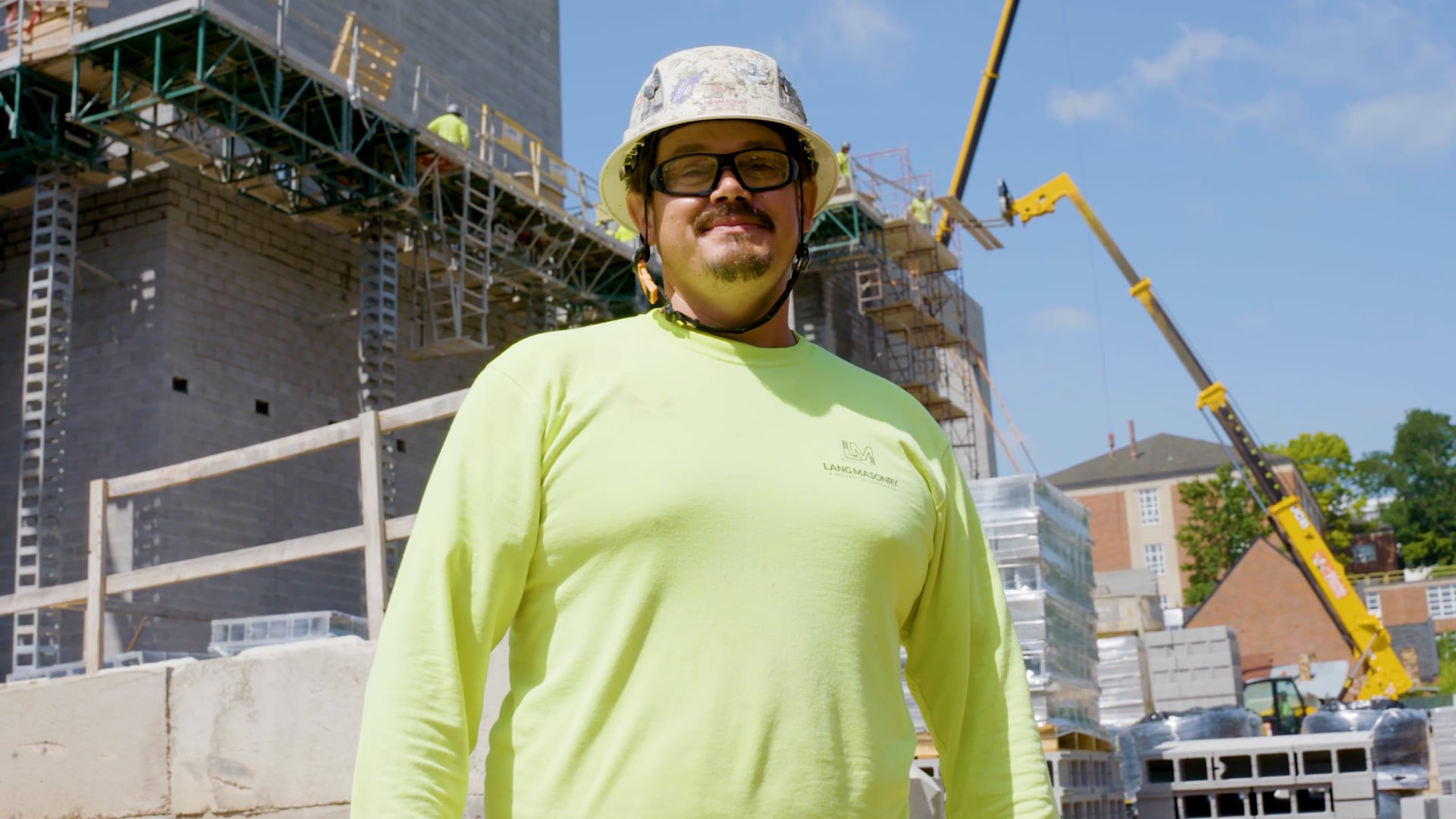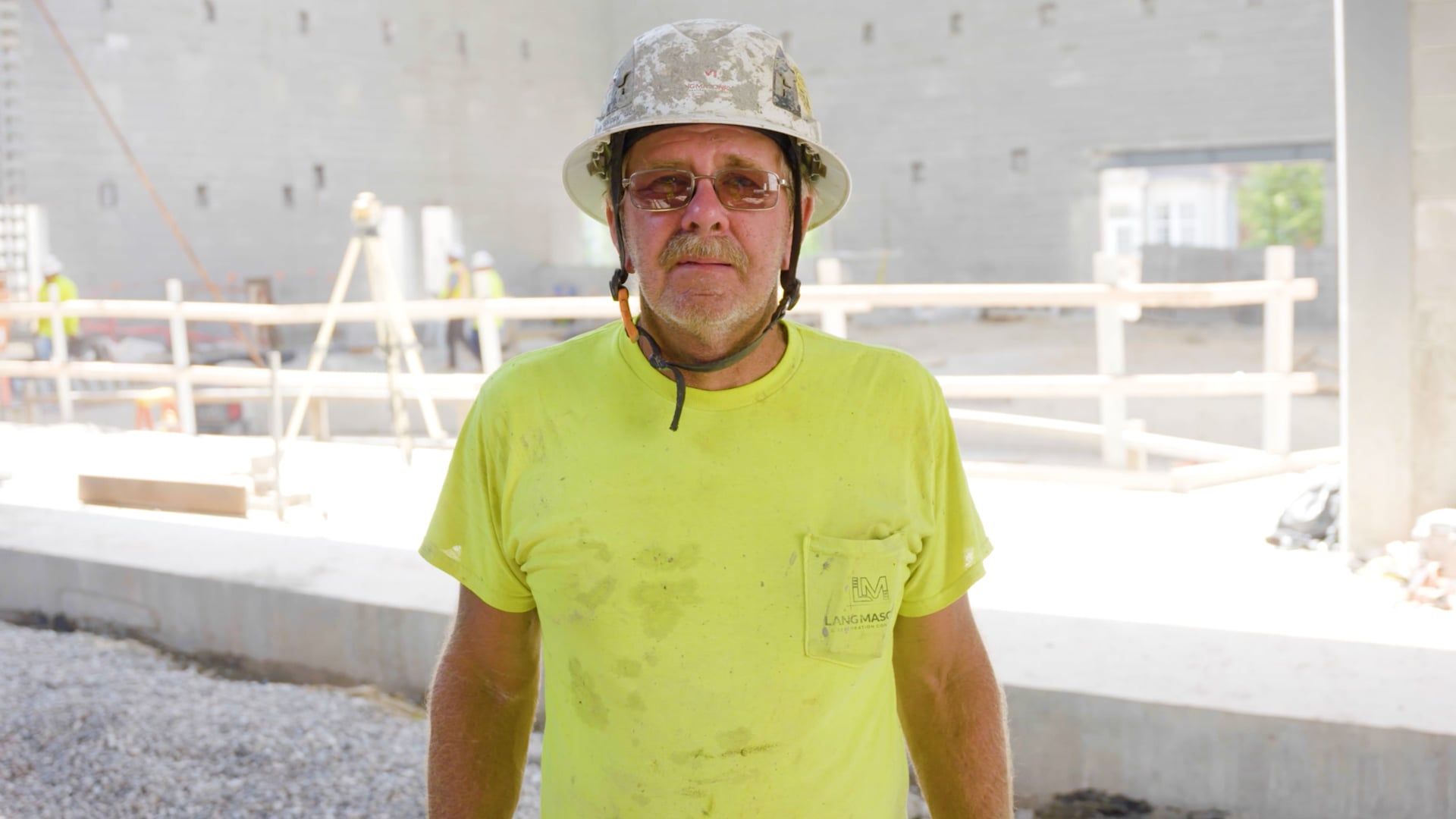
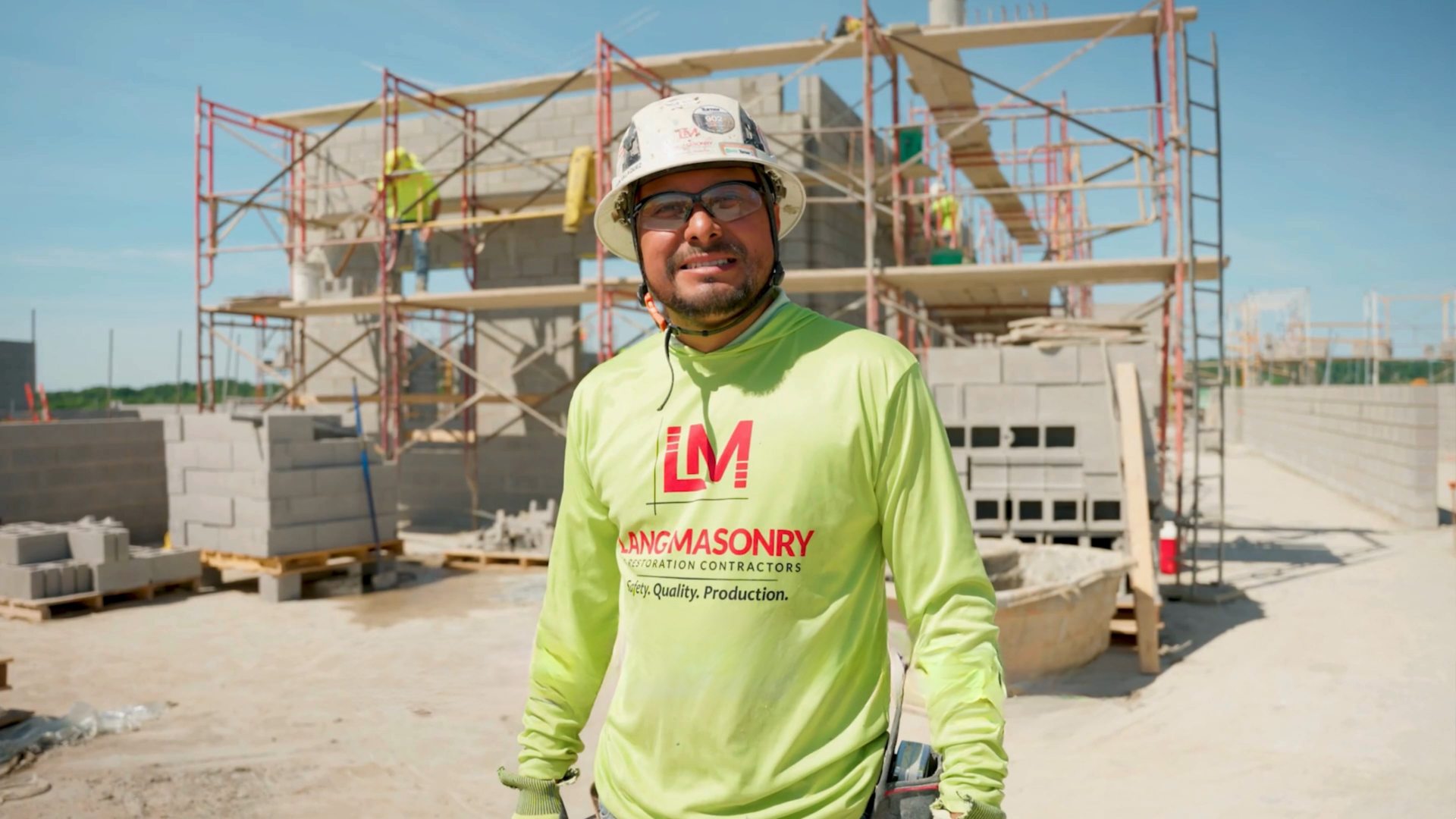
Romain Velazquez is a master mason at Lang Masonry. He has been with the company about eight years. He did not start there.
“You can start as a helper, a laborer, like a lot of people have done, like I did too.”
That sentence is worth sitting with if you are weighing your options right now: a high school senior looking at tuition numbers, someone in their thirties done with a job that goes nowhere, a vocational student wondering whether the trade actually pays off long term. Romain’s answer is eight years of proof.
What the Work Actually Is
Masonry gets described in vague terms by people who have never done it. Romain describes it plainly.
“We lay brick, block, stone. Commercial and industrial work around Cincinnati, Kentucky, Indiana, Columbus.”
That is the job. You are working with real material, on real structures, in real weather. Commercial and industrial masonry means schools, hospitals, warehouses, distribution centers, institutional buildings. The kind of work that gets used every day by people who will never know your name but will walk past your wall for the next fifty years.
It also means the work does not dry up. “The company always has work around here,” Romain says. Lang Masonry’s footprint across the Cincinnati region, Northern Kentucky, Indiana, and Columbus is a big part of why a career here can run for decades instead of seasons.
Safety Is the First Thing He Brings Up
Ask a lot of people about their employer and you get benefits, or pay, or the boss. Ask Romain and safety comes first.
“It’s a very safe company. Safety is always first: that you have gloves, that you have glasses, a hard hat. Especially up at heights, that you’re secure, so that the way you come to work is the way you go home. That’s the most important thing.”
Masonry is physical work performed at elevation with heavy material. Nobody in the trade pretends otherwise. What separates a good masonry contractor from a bad one is whether that reality is managed seriously or treated as somebody else’s problem. Gloves, eye protection, hard hats, and fall protection are not paperwork. They are the reason a mason gets to have a thirty year career and a body that still works at the end of it.
The Path: Helper, Mason, Foreman, Superintendent
Here is the part that gets left out of the college versus trades conversation. In masonry, the ladder is real and it is visible from the ground floor.
Romain lays it out in order: “You start as a helper, then mason, then foreman, superintendent. It depends on your drive and your motivation to work.”
You do not apply for the top. You get hired as a laborer, you learn the material, you learn the line and the level, you learn how a wall goes up correctly. As your skill grows, so does your position and your pay. There is no four year degree gating any step of it, and there is no debt attached to the training. You get paid while you learn.
“It depends on your position, and your knowledge,” Romain says. That is the honest version. Nobody hands it to you. But the ceiling is not set by a diploma. It is set by how good you get and how much you want it.
Steady Hours, Paid Holidays, and Overtime
Romain’s read on the practical side:
“Paid holidays, depending on your time with the company. After a year they give you vacation. You have steady hours in the week. Overtime, depending on the position. It’s a company that gives you overtime.”
Steady weekly hours matter more than most people realize when they are shopping careers. Consistent hours plus available overtime is how a trade turns into a household income, a mortgage, and a plan. That is the difference between a job and a career.
“For Anyone Who Needs an Opportunity”
Romain closes his interview by talking about people who are not in the trade yet.
“Look us up on the internet at langmasonry.com. You can find us through Facebook. They’ll help you in Spanish and in English, for everyone who needs an opportunity, who doesn’t have work.”
The skilled trades in this country are short on people. Masonry is short on people. Experienced masons are retiring faster than new ones are coming in, and the demand for commercial and industrial masonry has not slowed down to match. That gap is not a crisis if you are the one walking into it. It is leverage.
“I’m grateful to the company because it gives you a lot of opportunities and it always has good work, good opportunities, and you grow as a worker.”
Start Where Romain Started
Eight years ago he was a helper. Today he is a master mason with a skill that cannot be outsourced, automated, or taken away from him, and buildings across four states with his work in them.
No tuition. No debt. Paid from day one.
If you want to know what the trade actually looks like, apply and find out.
Lang Masonry is hiring laborers, masons, and foremen across the Cincinnati region, Kentucky, Indiana, and Columbus. Apply at langmasonry.com/careers.