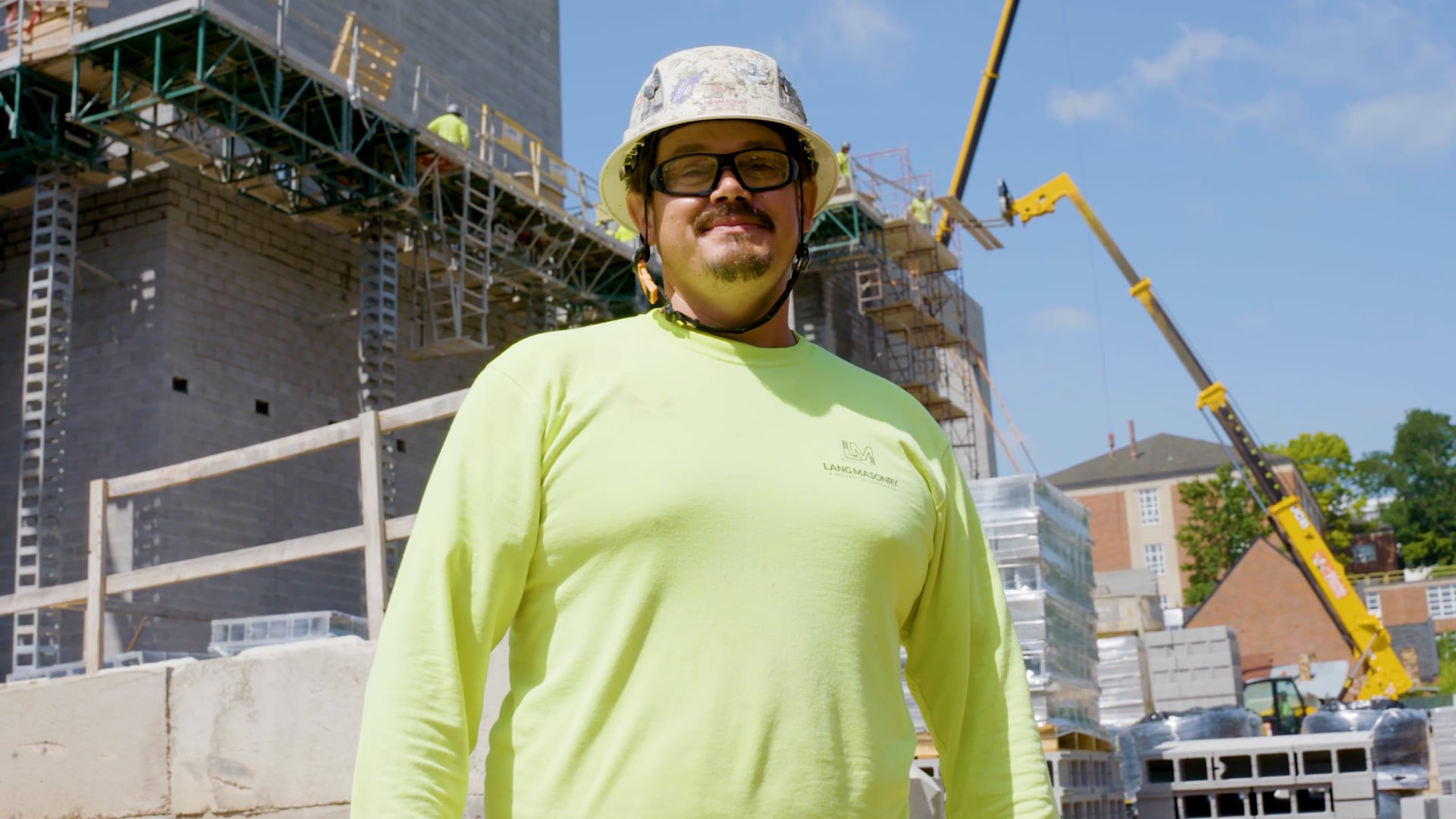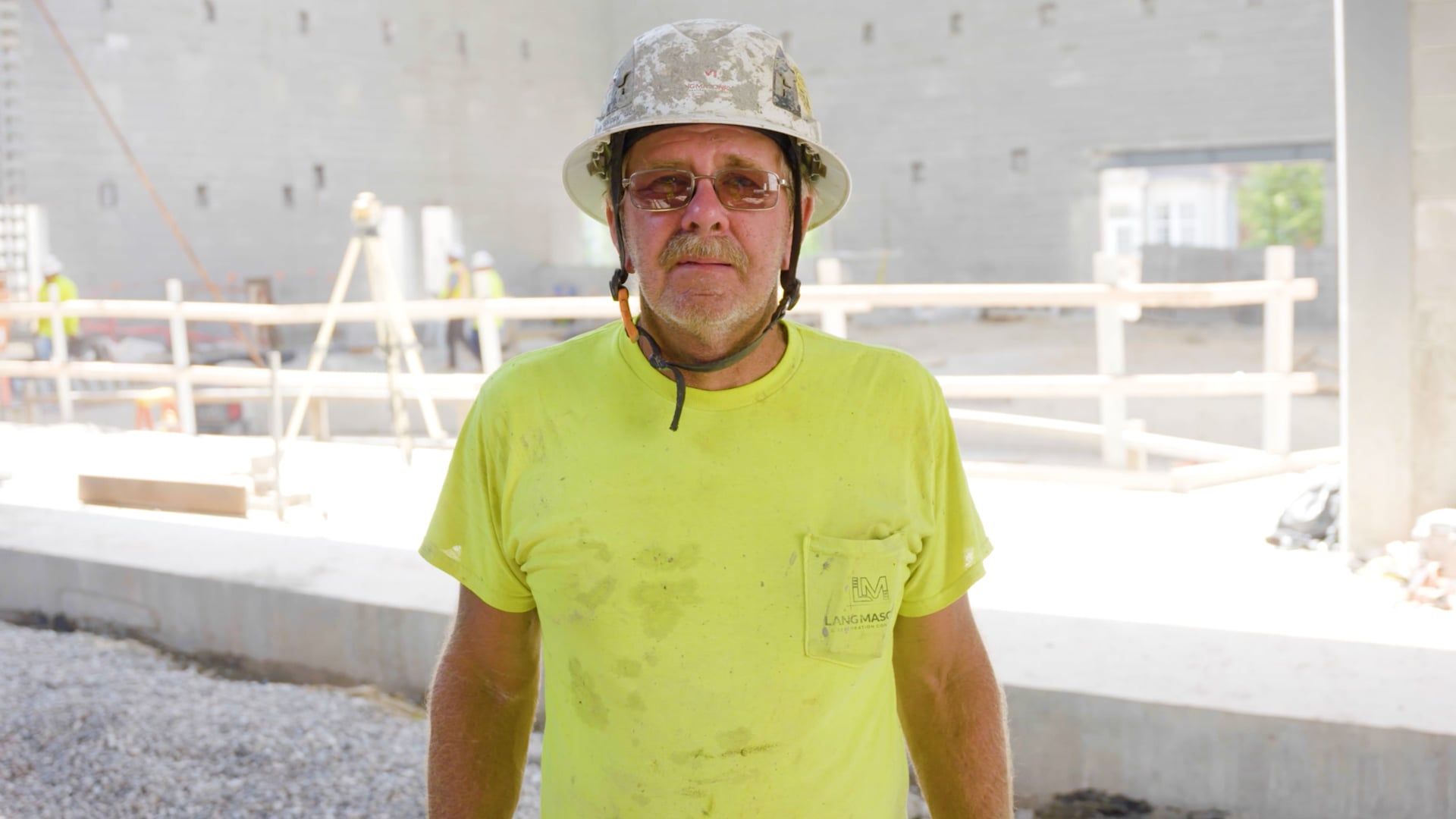
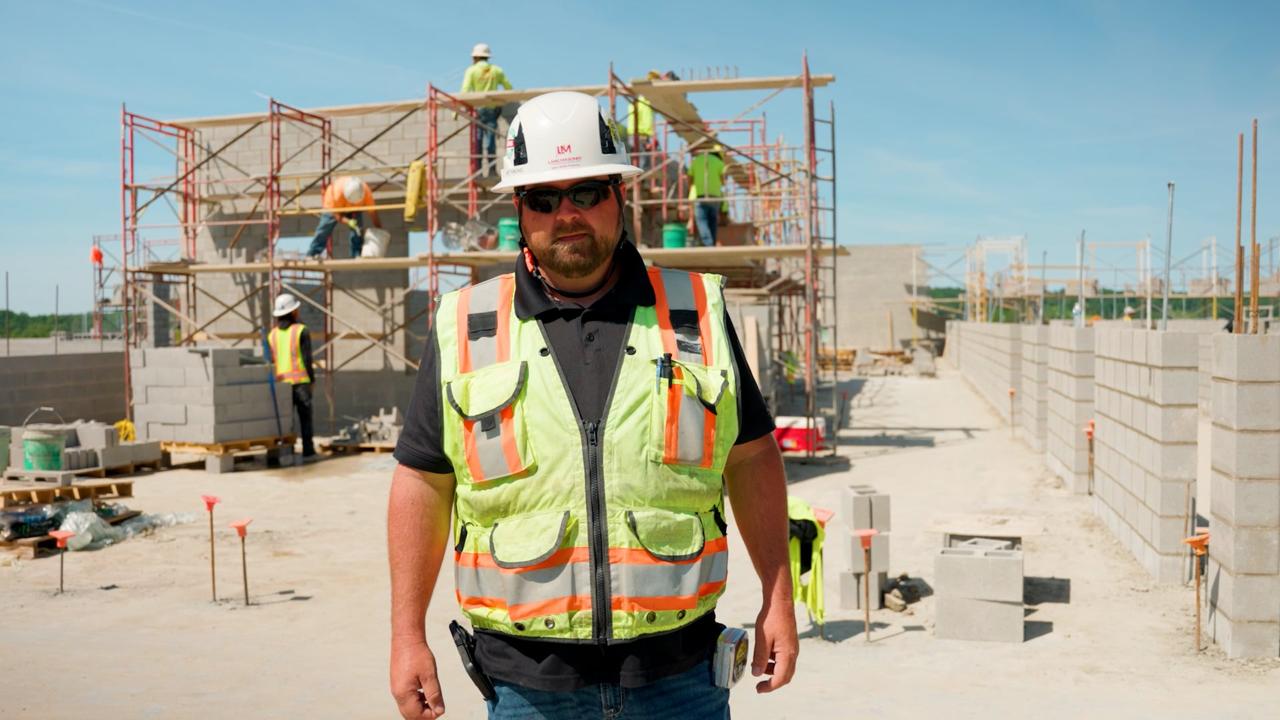
Most career advice assumes you know where you’re going before you start. Matt Kincaid didn’t. He finished school, needed work, and took a job as a laborer at Lang Masonry.
That was twenty years ago. Today he’s General Superintendent, and he has his eye on running the company.
His path is worth walking through in detail, because it’s a fair picture of what a masonry career actually looks like when you take it seriously.
The Progression: Six Roles, One Company
Matt didn’t jump from the bottom to the top. He worked through the trade:
Laborer. The entry point. Mixing mud, moving material, keeping the masons supplied and the site running. It’s physical, and it teaches you how a wall actually gets built before anyone hands you a trowel.
Equipment operator. Running the machinery that moves material and gets crews where they need to be. A different skill set, and a step up in responsibility and pay.
Mason. The craft itself. Laying block and brick to spec, on line, on schedule. This is where Matt decided he wanted to go, and Lang trained him to get there.
Superintendent. Running a job site. Managing crews, schedules, material, safety, and quality on the wall.
Project manager. Two and a half years of running projects from the office side: budgets, scheduling, coordination with GCs and other trades.
General superintendent. Where he is now, overseeing operations across jobs.
Six roles. One employer. No four-year degree at any point.
“You’re Not Stuck Anywhere”
Ask Matt what the biggest perk of working at Lang Masonry is and he doesn’t lead with pay or benefits. He leads with movement.
“You’re not stuck anywhere. If you want to succeed in your career, you work hard, put in the effort, there’s always opportunity for you.”
That’s the part most people don’t understand about the trades. The stereotype is that a construction job is a dead end: you show up, you work hard, you show up again tomorrow, and in thirty years you’re doing exactly what you were doing on day one.
That is not how a well-run masonry company operates. Every step in Matt’s progression existed because somebody above him moved up and somebody had to be ready to take the slot. Companies that build people internally always have that gap opening. The question is whether you’re prepared to fill it.
Nobody Expects You to Show Up Knowing How to Lay Block
The most common reason people don’t consider masonry is that they assume they’re already behind. They’ve never touched a trowel. They wouldn’t know a header from a stretcher. Why would anyone hire them?
Matt addresses this directly, because he sees it constantly:
“Guys come in, want to be a mason, never laid block before in their life. We put them through a training program, teach them the ins and outs, and all the methods it takes to do that job, and put them in the field, and we continue training them until they succeed in the field that they want to be in.”
That’s the model. New laborers go through training that explains what the job actually is. People who want to move into the craft get taught the craft. And the training doesn’t stop the day you’re in the field; it continues until you’re genuinely competent.
You don’t need experience to start. You need to want it.
“You Can Pretty Much Write Your Own Check Here”
Matt’s phrasing, not ours. And it’s an honest reflection of how compensation works in the trades.
There is no salary ceiling handed to you at orientation. Your earnings track your skill, your reliability, and how much responsibility you’re willing to carry. A laborer earns less than an operator. An operator earns less than a skilled mason. Every one of those steps is available to someone who started with nothing but a willingness to show up and learn.
Compare that with the four-year degree path: four years of tuition, four years of not earning, and a job market that doesn’t guarantee anything on the other side. In masonry, you earn from day one and the training is paid for by the work.
Why Masonry Specifically
Matt’s answer to why he’d recommend the trade is about as unsentimental as it gets:
“It’s never-ending. There’s buildings being built every day, every year, and it’s going to continue that way for years to come. You always have a job.”
He’s right, and the numbers back him up. The construction industry is facing a well-documented labor shortage, with hundreds of thousands of unfilled positions and an aging workforce heading toward retirement. Masonry in particular is a craft that can’t be automated away or outsourced. The wall gets built on site, by hand, by someone who knows what they’re doing.
And the work lasts. Buildings Matt helped lay block on twenty years ago are still standing, and they’ll be standing long after he retires. That’s not a small thing. Most jobs produce nothing you can point at.
His other note is simpler: “If you love working with your hands and being outside, it’s definitely the career path for you.”
That’s a real filter. Masonry is physical. It’s outdoors. It’s hot in July and cold in February. If that sounds like a dealbreaker, this isn’t for you. If it sounds like a relief compared to a desk, keep reading.
What Matt Wants Next
Twenty years in, six roles deep, general superintendent of the company. Where does he go from here?
“In the future, I’m wanting to eventually move up and become president of the company. Years down the road, opportunity’s there.”
He said it plainly, without hedging. That’s what happens when a company actually promotes from within: people stop assuming there’s a ceiling.
Starting Your Own Path
If you’re weighing college against a trade, changing careers, or just tired of work that doesn’t add up to anything, masonry is worth a serious look. You’ll be paid while you learn. You’ll build skills that don’t expire. And at Lang Masonry, you’ll have a documented path from laborer to wherever you decide to take it.
Matt started with nothing but a willingness to work.
See open positions and apply: langmasonry.com/careers